


Olive oil coffee is coffee blended, shaken, or frothed with a small amount of extra virgin olive oil, usually one teaspoon to one tablespoon per cup, for a silky, slightly buttery drink. To make it at home, froth 1 tablespoon of extra virgin olive oil with about ⅓ cup of oat milk and pour it over a shot of espresso. It takes five minutes and one frother.
We make extra virgin olive oil from our family's groves in Jaén, Spain, so we care a lot about what makes an oil worth putting in a cup. Below you'll find the exact recipe, the ratio range, the trick that stops the oil from separating, iced and cold foam versions, and an honest look at calories and side effects.
Key takeaways
- Ratio: start with 1 teaspoon of extra virgin olive oil per cup, and go up to 1 tablespoon if you like a richer texture.
- Method: froth or blend the oil into milk. Plain black coffee and oil will separate.
- Oil: use a fresh extra virgin olive oil. Peppery oils taste stronger in coffee, so go lighter with them.
- Health: 1 tablespoon adds about 119 calories, and on an empty stomach it can upset digestion.
- Time: about 5 minutes, one serving.
What Is Olive Oil Coffee, and Why Did Starbucks Make It Famous?
Olive oil coffee is a drink where a small amount of extra virgin olive oil is emulsified into coffee, milk, or milk foam to give it a rounder, silkier texture. Starbucks popularized it in 2023 with its Oleato line, but pairing oil and coffee is not a new idea.
Starbucks launched Oleato in Milan in early 2023, then brought it to the U.S. The lineup included a Golden Foam cold brew, an Oleato Caffè Latte with oat milk, and an iced shaken espresso with oat milk and toffee nut. Starbucks says it uses Partanna extra virgin olive oil, and its founder Howard Schultz has said the idea came from his time in Italy. You can read the company's own account of the launch.
The drink is made in three main ways. You can add the oil straight to brewed coffee, froth it into hot milk for a latte, or whip it into cold foam and pour it over iced coffee. Every method relies on the same principle: oil needs agitation and a little fat from milk to stay blended.
Recipe writers who have made it describe a balanced cup, with buttery, fruity, and floral notes from the oil sitting against the bitter, chocolatey depth of the coffee. Others find the texture is the main effect and the flavor stays subtle when the oil is mild and the amount is small. The result depends heavily on the oil you pick, which is why we cover that choice in its own section below.
If you're searching for an "Oleato copycat" or an "olive oil latte" recipe, this guide covers both. The recipe in the next sections follows the structure of the hot Oleato latte and adds ratios and troubleshooting that most copycat recipes skip.
What Do You Need to Make Olive Oil Coffee at Home?
You need only three ingredients to make olive oil coffee: espresso or strong coffee, a milk with some fat in it, and a good extra virgin olive oil. You also need a way to froth or blend. Because there are so few ingredients, the quality of each one shows up in the cup.
Ingredients
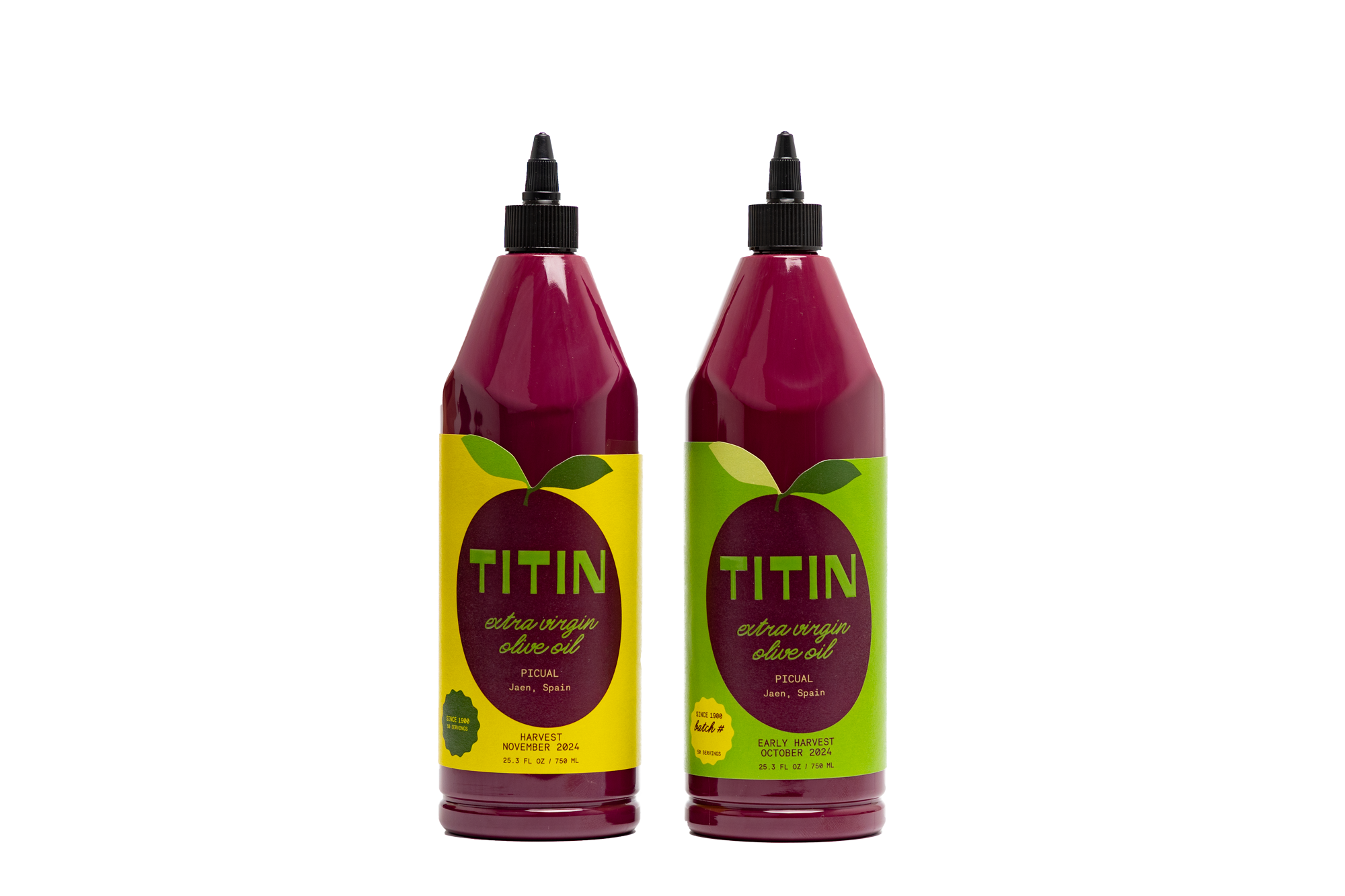
- Extra virgin olive oil: choose a fresh, high-quality extra virgin oil. Refined olive oil lacks the flavor compounds that make this drink interesting. Our Universal Picual extra virgin olive oil is our everyday oil, harvested in November, with fresh olive and almond notes.
- Coffee: a shot of espresso (about 1.5 oz) is the standard. Starbucks builds the Oleato latte on its Blonde Espresso Roast, a light roast, but any medium-bodied espresso works. Strong brewed coffee or cold brew also work.
- Milk: barista-style oat milk is what Starbucks uses, and its fat and proteins help hold the oil in suspension. Whole dairy milk froths and emulsifies well too. Higher-fat milks work best.
- Sweetener (optional): a teaspoon of maple syrup, vanilla syrup, or hazelnut syrup rounds out the flavor. The Starbucks Oleato latte is served unsweetened.
Equipment
A handheld milk frother is the easiest tool, and an electric frother or blender works just as well. If you have neither, put the milk and oil in a jar with a tight-fitting lid and shake hard for 15 to 20 seconds. An espresso machine helps, but a moka pot or strong French press coffee is a fine substitute.
One note on the oil: because the olive oil is a main ingredient here, not a garnish, we suggest tasting it on its own first. If you enjoy it straight, you'll likely enjoy it in coffee. If it tastes sharp or bitter on a spoon, use less of it in the cup.
How Do You Make Olive Oil Coffee? (Step-by-Step Recipe)
To make olive oil coffee, froth ⅓ cup of oat milk with 1 tablespoon of extra virgin olive oil, brew a shot of espresso, and pour the frothed mixture over the espresso. The whole process takes about 5 minutes and makes one serving.
Olive Oil Latte (Oleato-Style)
Prep: 2 min | Cook: 3 min | Total: 5 min | Serves: 1
Ingredients
- 1 shot espresso (about 1.5 oz / 45 ml)
- ⅓ cup (80 ml) barista-style oat milk
- 1 teaspoon to 1 tablespoon extra virgin olive oil (start with 1 teaspoon)
- Optional: 1 teaspoon maple syrup or vanilla syrup
Instructions
- Pull a shot of espresso into your mug.
- Add the oat milk and olive oil to a jug or jar. Add the sweetener now if you're using one.
- Froth for 15 to 20 seconds with a handheld frother, until the milk is thick and the oil is fully blended in. There should be no visible oil slick on top.
- Pour the frothed milk over the espresso. Stir gently, or leave it unstirred for a stronger olive flavor on the first sips.
- Drink right away, while the oil is still evenly blended.
A few tips help this come out right the first time. Taste before you add more oil, since the flavor builds as you drink. Use the frother for at least 15 seconds, because a short froth is the most common reason the oil separates. And if your oil is very peppery, stay near 1 teaspoon.
Stirring changes the drink. Some recipe developers found the olive flavor more noticeable when they left the latte unstirred, and milder and smoother when they stirred it in. Try it both ways and keep whichever you prefer.
How Much Olive Oil Should You Put in Your Coffee?
Published recipes range from ½ teaspoon per 8-ounce cup to 1 tablespoon per drink. We suggest starting at 1 teaspoon and moving up to 1 tablespoon only if you enjoy the taste and texture. The right amount depends mostly on how strong your olive oil is and how big your cup is.
| Amount of oil | What to expect | Best for |
|---|---|---|
| ½ tsp per 8 oz cup | Subtle. The oil gently rounds out the coffee. One recipe developer used this ratio because her oil had a strong flavor. | First-timers and peppery oils |
| 1 tsp per cup | Noticeably silkier texture, mild olive flavor. Our suggested starting point. | Most people |
| 1 tbsp per drink | Rich and buttery, the "spoonful" Starbucks describes. Olive flavor is clear. | Fans of a creamy, indulgent cup |
Calories are the reason not to overdo it. One tablespoon of olive oil has about 119 calories, according to the USDA FoodData Central database. That's roughly the same as a small snack, and it all comes from fat.
Two things change how much oil you'll want. First, the oil itself: a bold, peppery oil tastes stronger in a cup than a delicate, fruity one, so you'll want less of it. Second, the drink size: a 1.5-ounce espresso with ⅓ cup of milk is much smaller than an 8-ounce mug of coffee, so the same tablespoon tastes far stronger in the small drink.
If you're unsure, make it with 1 teaspoon, taste it, and adjust the next cup up or down by a half teaspoon. It takes two or three tries to find your ratio.
How Do You Stop Olive Oil From Separating in Coffee?
Olive oil separates from coffee because oil and water don't mix on their own, and black coffee is mostly water. The fix is to emulsify the oil: use agitation from a frother, blender, or hard shaking, and blend it into a milk that contains fat, which helps hold the oil droplets in suspension.
Milk is the easiest route. Its natural fat and proteins help the oil blend, which is why most oil-and-coffee recipes froth the oil into milk first and then combine it with the coffee. Oat barista blends are designed to froth well and are a popular choice.
Four ways to emulsify olive oil in coffee
- Handheld frother: add the oil and milk to a jug and froth 15 to 20 seconds. This is the simplest method and gives a foamy top.
- Blender: for black coffee, one olive oil producers' group suggests blending 6 oz of strong coffee with 1.5 teaspoons of extra virgin olive oil to make an olive oil "cappuccino." The blender's speed does the emulsifying.
- Jar shake: put the coffee and oil in a jar with a tight lid and shake vigorously. It works with no equipment, though the foam is lighter.
- Shaker: shake the oil into hot or iced espresso before topping with milk. This is the approach behind the shaken espresso versions.
What to do if it still separates
If you see an oil slick on top, the usual causes are too little agitation, too much oil for the amount of liquid, or letting the drink sit. Re-froth or shake it, cut the oil back to 1 teaspoon, and drink it soon after making it.
Temperature matters less than technique, but blending into warm milk generally goes smoothly because the oil stays liquid and flows freely. With cold foam, use very cold, high-fat milk for the best froth.
Can You Make Olive Oil Coffee Iced or With Cold Foam?
Yes, olive oil coffee works well iced. The two most popular iced versions are olive oil cold foam poured over cold brew or iced coffee, and a shaken espresso where the oil is shaken with ice and topped with milk. Both use the same emulsifying principle as the hot latte.
Olive oil cold foam
Add cold barista milk, olive oil, and a little syrup and vanilla to a jar, then froth for 15 to 20 seconds until thick. One recipe uses hazelnut syrup and vanilla extract with the oil. Pour the foam over iced coffee. Cold foam works best with very cold, high-fat milk and a stainless steel jug to keep it cold.
Cold brew with olive oil
Steep coarsely ground coffee in cold water for about 8 hours in the fridge, strain it, then stir in a small amount of oil. One cold brew recipe uses ½ teaspoon of olive oil per 8 ounces of coffee, then tops the drink with cold milk foam. The foam helps the oil stay blended.
Shaken espresso
Put a shot of espresso, olive oil, ice, and a little syrup in a shaker or jar, shake hard, pour into a glass, and top with cold oat milk. This mirrors the Oleato iced shaken espresso. Note that Starbucks adds toffee nut syrup to its version.
Dairy-free and lower-carb options
Oat milk is not required. Any dairy or non-dairy milk works, and unsweetened almond, soy, or coconut milk lowers the sugar and carbs if that matters to you. Higher-fat milks froth better and hold the oil more reliably, so shake or froth a little longer with thinner nut milks.
Curious about other ways to use flavored oils in the kitchen? See our guide to infused olive oil recipes. For coffee, we'd keep to a plain extra virgin olive oil and add flavor with syrup, vanilla, or a pinch of cinnamon instead.
Which Olive Oil Is Best for Coffee?
The best olive oil for coffee is a fresh extra virgin olive oil with a mild to medium flavor. Extra virgin is the grade that keeps the natural flavor and phenolic compounds, and a very strong, peppery oil will dominate a delicate cup. Freshness matters, because stale oil tastes flat or rancid.
Extra virgin olive oil is the only grade that contains the main phenolic compounds, such as hydroxytyrosol and oleuropein, which give good oil its characteristic bitter and pungent kick. Those same compounds are why a bold oil can taste sharp in coffee. If you're new to this drink, pick a gentler oil or use less.
Which Titin oil suits which coffee?
| Oil | Character | Suggested use in coffee |
|---|---|---|
| Universal Picual | Balanced, with fresh olive and almond notes. Harvested in November. | Everyday lattes. Start with 1 teaspoon. |
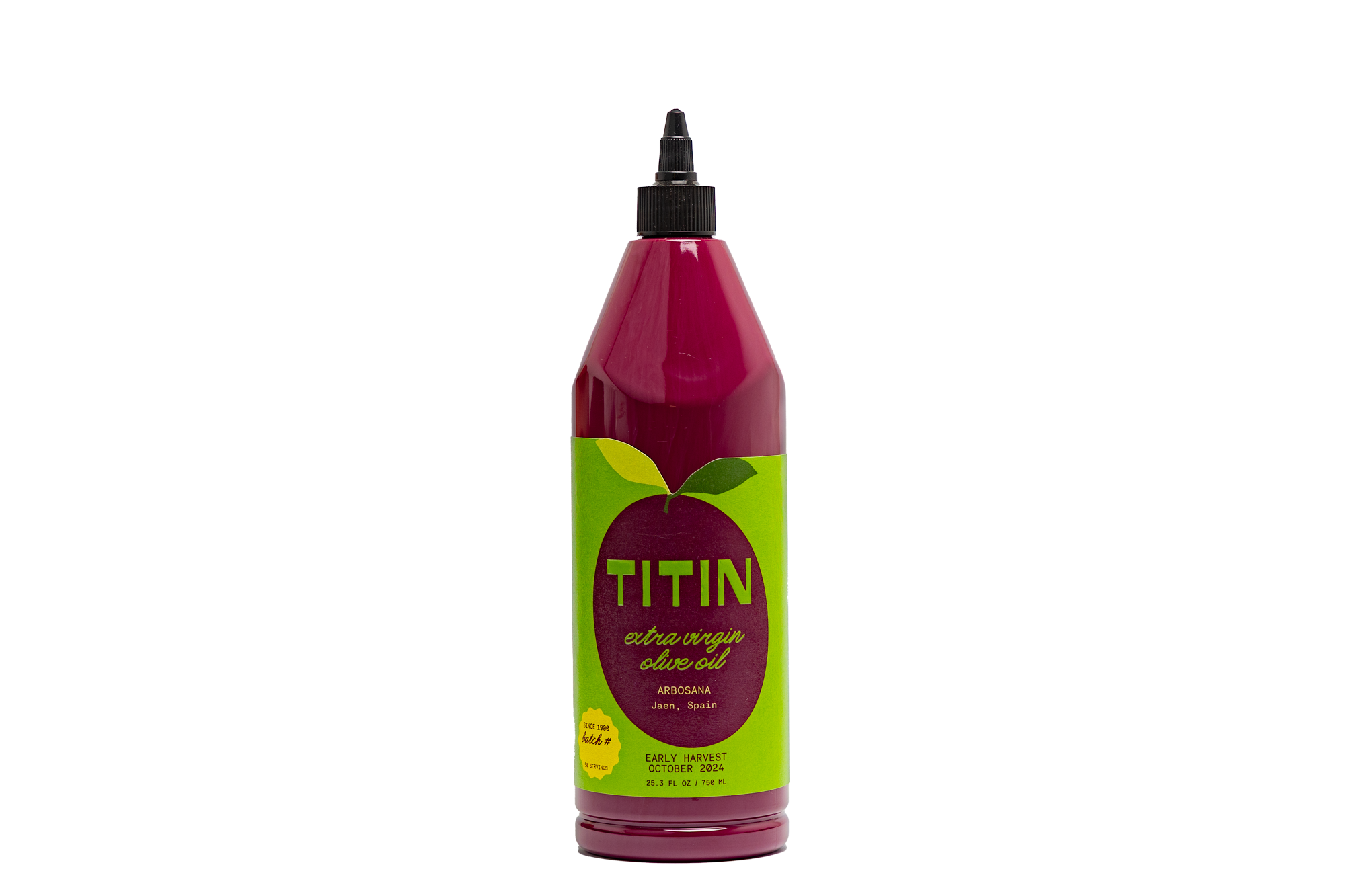
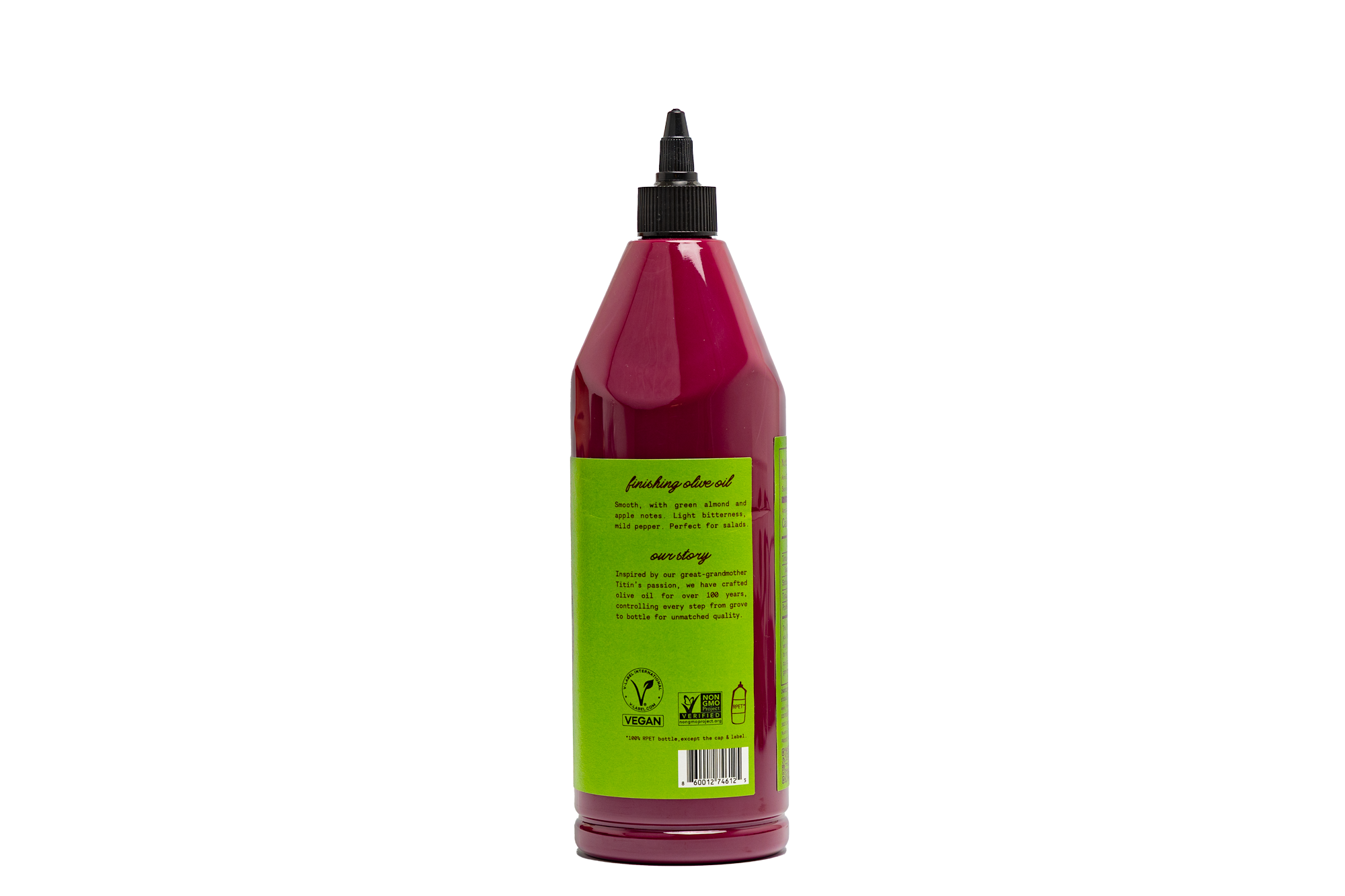
| Finishing Arbosana | Delicate and fruity, the gentlest oil in our range by description. | First-timers and a smoother, fruit-forward cup. |
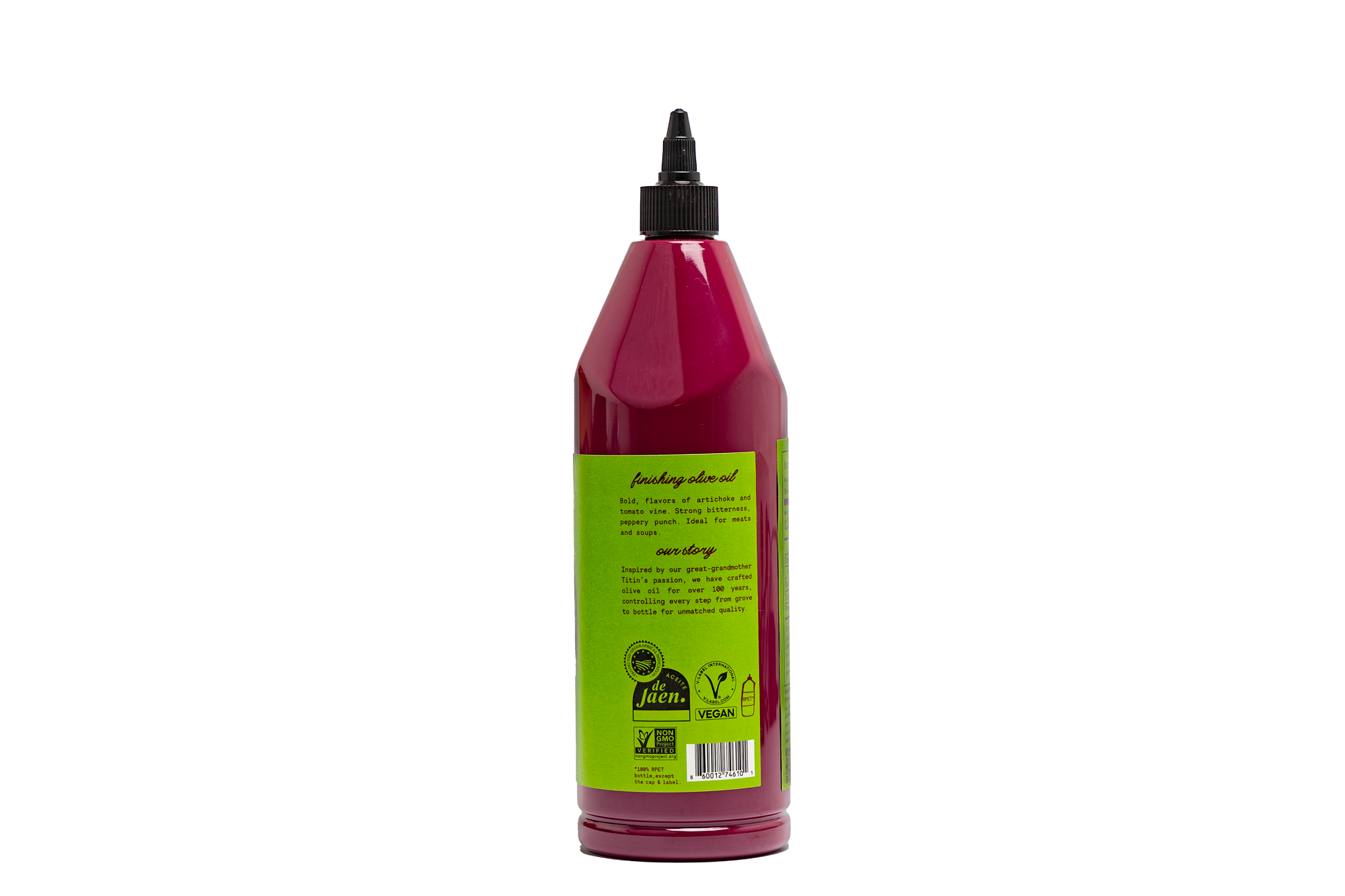
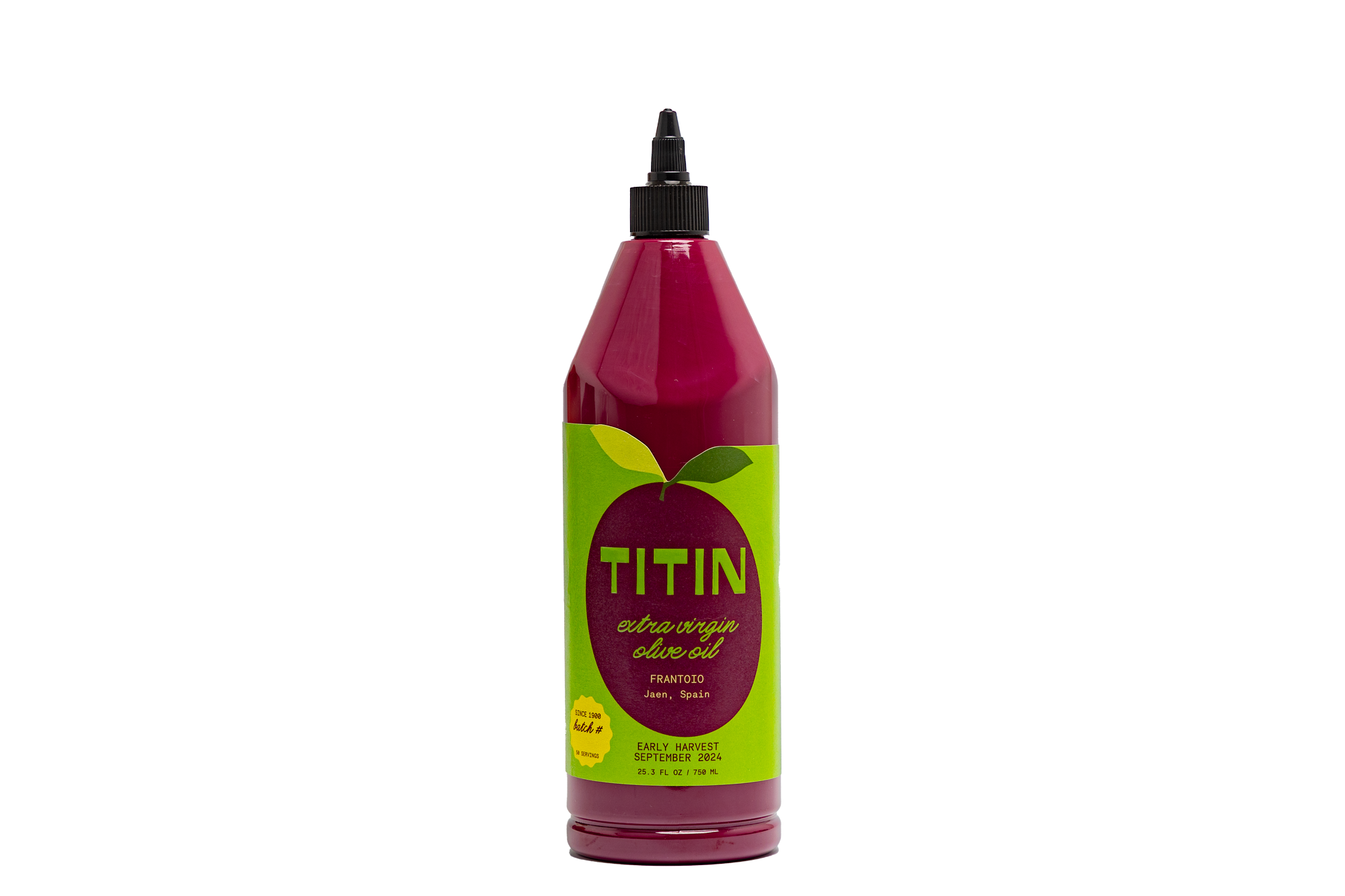
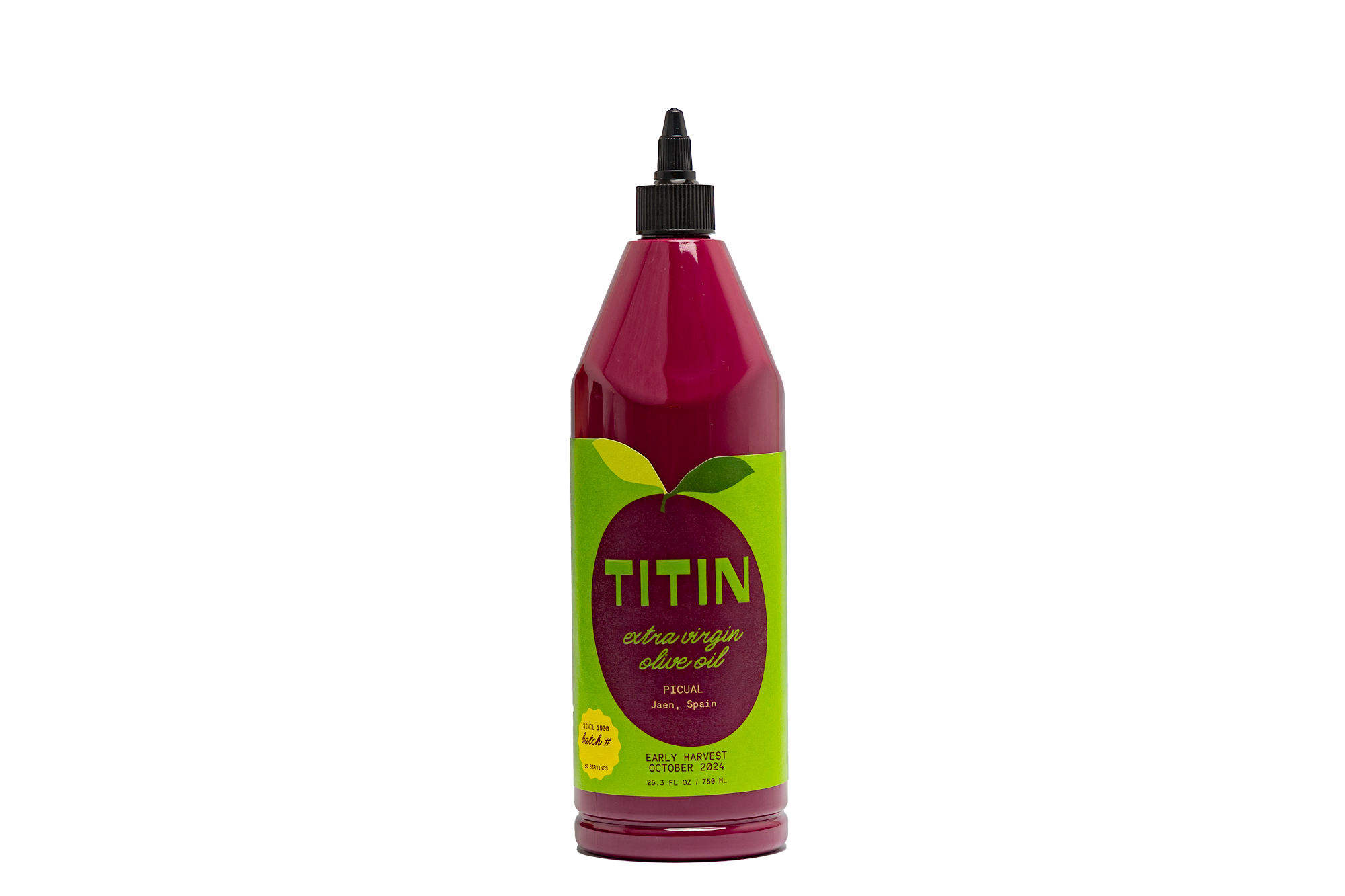
| Finishing Picual | Intense flavor, harvested early for a brighter, greener profile. | Bold-flavor fans. Use ½ to 1 teaspoon. |
These are our suggestions based on each oil's flavor profile as described on its product page. Taste each one on its own first, then adjust the amount in your cup.
Where the oil comes from also affects quality. Our oils come from Jaén, Spain, and each bottle carries a traceability code that shows its grove origin, which you can look up on our traceability page. We harvest our Finishing oils earlier, in October, for a brighter flavor and higher polyphenol content, and our Universal oil in November. You can read more about our harvest, cold pressing, and storage on our origin page.
If you want an oil for both coffee and everyday cooking, our Universal collection is the place to start.
Is Olive Oil Coffee Healthy? Calories, Benefits, and Side Effects
Olive oil coffee combines two ingredients that each contain well-studied compounds, but adding oil to coffee doesn't appear to create new health effects on its own, and it adds about 119 calories per tablespoon. It's best treated as a texture and flavor choice, not a health hack.
What extra virgin olive oil and coffee each offer
Extra virgin olive oil is high in monounsaturated fat, mainly oleic acid, and contains phenolic compounds such as oleuropein and hydroxytyrosol. Coffee contains its own antioxidant compounds, including chlorogenic acid. Researchers have studied each of these ingredients separately, and both are common in traditional Mediterranean-style eating patterns.
What's less clear is whether the combination does anything special. Nutrition writers generally conclude that mixing the two likely gives you what each provides on its own, without a new combined effect. Claims that olive oil coffee speeds up weight loss or works as a fat-burning trick are popular online, but they aren't well supported for this specific drink.
Can olive oil coffee upset your stomach?
It can. Coffee already stimulates the bowels, and a tablespoon of fat on top of it can cause cramping or a laxative effect in some people. Registered dietitian nutritionist Frances Largeman-Roth told the Advisory Board that the effects may be stronger on an empty stomach. You can read the full discussion in the Advisory Board article.
To lower the risk, start with 1 teaspoon, drink it with or after food, and build up slowly. If you notice cramps or loose stools, cut back or skip it.
Calories, fasting, and who should check first
One tablespoon of oil adds about 119 calories, so if you're tracking calories, count it like any other added fat. Because it contains calories, olive oil coffee will break a strict fast, though some people follow looser fasting rules, so decide based on your own goals.
If you have a digestive condition, take medication, or follow medical dietary advice, ask your doctor before making it a daily habit. This article is general information and not medical advice.
Olive Oil Coffee FAQ
How much olive oil should I put in coffee?
Start with 1 teaspoon per cup. Published recipes range from ½ teaspoon per 8 ounces to 1 tablespoon per drink. Go up to a tablespoon only if you enjoy the taste and texture and your stomach handles it well.
Does olive oil coffee taste good?
It depends on the oil and the amount. Many people describe a smooth, slightly buttery texture with a mild fruity note. A very peppery oil or a large amount can taste sharp, so use a mild extra virgin olive oil and start small.
Why does olive oil separate in coffee?
Oil and water don't mix, and black coffee is mostly water. Blend the oil into milk with a frother or blender, or shake it hard in a jar, to emulsify it. Milk's natural fat helps keep the oil suspended.
Which olive oil is best for coffee?
A fresh extra virgin olive oil with a mild to medium flavor. Extra virgin keeps the full flavor and phenolic compounds, while a very intense oil can overpower the coffee. Taste the oil on its own before adding it to a cup.
Is olive oil in coffee healthy?
Extra virgin olive oil and coffee each contain beneficial compounds, but mixing them likely doesn't create new health effects. It adds about 119 calories per tablespoon, so treat it as a flavor and texture choice.
Will olive oil coffee upset my stomach?
It can. The fat combined with coffee may cause cramping or a laxative effect in some people, especially on an empty stomach. Start with 1 teaspoon and drink it with food.
Can I make olive oil coffee iced?
Yes. Froth the oil into cold, high-fat milk to make cold foam and pour it over iced coffee or cold brew, or shake the oil into espresso with ice and top with cold milk.
Does olive oil coffee break a fast?
Yes, if you follow a strict fast, because olive oil contains calories (about 119 per tablespoon). If your fasting approach allows a small number of calories, it may fit, but that's a personal choice.
Ready to Make Your First Olive Oil Coffee?
Olive oil coffee is one of the easiest coffee upgrades to try: five minutes, three ingredients, and a frother. Start with 1 teaspoon of a fresh extra virgin olive oil, froth it into oat milk, and pour it over espresso. Adjust from there until the texture and flavor suit you.
Want to try it with an oil made for the job? Explore our Universal extra virgin olive oil collection, and tell us how your first cup turned out.
Last updated: September 30, 2026