


A great olive oil dressing recipe takes about 5 minutes to make and only needs three core ingredients: extra virgin olive oil, an acid (lemon juice or vinegar), and salt. Whisk them together in the right ratio, and you have a dressing that beats any bottled version on the shelf. But here's what most recipes don't tell you: the olive oil itself is responsible for about 70% of the final flavor. Get the oil right, and every other decision becomes easier.
We make EVOO in Jaén, Spain — the region that produces more olive oil than any other place on earth — and we've tested these dressings with our own cold-pressed, single-variety oils across hundreds of combinations. What follows is the most complete guide to olive oil dressings you'll find: the foundational recipe, the ratio science, the EVOO selection guide, and five variations matched to the oils that make them sing.
TL;DR — Key Takeaways
-
The classic ratio is 3 parts EVOO to 1 part acid, but 2:1 gives bolder flavor for most dressings
-
Extra virgin olive oil only — regular or light olive oil lacks the polyphenols and flavor that make a dressing worth eating
-
Picual EVOO (peppery, intense) is best for bold salads and proteins; Arbosana (fruity, delicate) for seafood and lighter greens
-
Dijon mustard is the secret emulsifier — it binds oil and acid so the dressing stays together
-
Homemade olive oil dressing keeps for up to 2 weeks refrigerated in a sealed jar
-
The single biggest mistake: using an oil that's old, poor quality, or too neutral
The 3-Ingredient Base — The Olive Oil Dressing Recipe Everyone Should Know
The best olive oil dressing starts with the simplest possible formula. Three ingredients, one jar, five minutes. Once you have this down, every variation is just a creative decision on top of a solid foundation.
The Base Recipe
- 3 tablespoons extra virgin olive oil (see the EVOO guide below for which one)
- 1 tablespoon acid (fresh lemon juice, red wine vinegar, or white wine vinegar)
- ¼ teaspoon fine sea salt
- Optional but recommended: ½ teaspoon Dijon mustard, pinch of freshly ground black pepper
Instructions:
- Add the acid, salt, and Dijon mustard (if using) to a small jar or bowl. Whisk or stir to combine.
- Slowly pour in the olive oil while whisking continuously. For a jar: add all ingredients, seal, and shake vigorously for 20–30 seconds.
- Taste and adjust — more acid for brightness, more oil for smoothness, a pinch more salt if it tastes flat.
- Use immediately, or store sealed in the refrigerator for up to 2 weeks. Shake well before each use.
Yield: About ¼ cup, enough for 2–3 generous salads.
This recipe is naturally vegan, dairy-free, and gluten-free. It contains no preservatives, no added sugars, and no mystery ingredients — which is more than you can say for most bottles on a supermarket shelf.
Why this works: The salt dissolves into the acid first, which distributes it evenly throughout the dressing. Adding oil last and whisking gradually creates a temporary emulsion — the droplets of oil suspend in the acid rather than sitting on top of it. The Dijon mustard, if you use it, stabilizes that emulsion significantly. More on the science of emulsification below.
The Ratio Debate — 3:1, 2:1, or 1:1?
The oil-to-acid ratio is the most debated variable in homemade dressing. Every food writer seems to have a different opinion. Here's what actually matters — and when to use each ratio.
| Ratio (Oil:Acid) | Flavor Profile | Best For |
|---|---|---|
| 3:1 | Rich, mellow, oil-forward | Delicate greens (butter lettuce, Little Gem), grain salads, pasta salads |
| 2:1 | Balanced, the everyday sweet spot | Mixed greens, arugula, roasted vegetable salads |
| 1:1 | Sharp, tangy, punchy | Robust greens (kale, radicchio), meats, hearty legume salads |
The classic French vinaigrette tradition calls for 3:1, and that ratio makes sense when you're using a mild, fruity oil with a mild acid like white wine vinegar. But if your olive oil has a bold, peppery character — like a Picual from Jaén — a 2:1 ratio often gives better balance because the oil's intensity carries through without overwhelming the acid.
The 1:1 ratio, popularized recently as a "trick," works well for strong-flavored salads where you want acidity to cut through. It can taste too sharp with lemon juice unless you add a small amount of honey or maple syrup (½ teaspoon) to round the edges.
Our recommendation: Start at 2:1 for most everyday dressings. Adjust based on the greens you're using and the oil's intensity. A robust Picual finishing oil might want a slightly more generous pour of acid; a gentle Arbosana can carry a 3:1 ratio beautifully.
Why Your Olive Oil Is the Most Important Ingredient
Every recipe in this category tells you to "use a good quality extra virgin olive oil." Almost none of them explain what that actually means — or why it matters so much for dressings specifically.
In a cooked dish, heat transforms the flavor of the oil. Polyphenols break down, volatile aromatics dissipate, and most of the oil's character becomes background noise. In a raw dressing, the oil is the main event. There is nothing to hide behind. This is why a flat, neutral, or rancid oil ruins a dressing in a way it might not ruin a sautéed vegetable.
What to look for in an EVOO for dressings:
Acidity below 0.8%. True extra virgin olive oil must have a free acidity of 0.8% or lower [FUENTE: International Olive Council standard]. Lower acidity generally indicates fresher, better-handled fruit. Many premium oils, including ours, come in well below this threshold.
A recent harvest date. Olive oil is a fresh product, not a shelf-stable condiment. Peak flavor and polyphenol content occur in the months immediately after harvest. Look for oils with a harvest date (not just a "best before" date) on the label. Olive oil harvested in November in Spain should ideally be consumed within 12–18 months.
Cold-pressed and single-origin. Cold-pressing preserves the volatile compounds responsible for the fresh, grassy, fruity, or peppery notes that make a dressing interesting. Single-origin oils — made from olives grown in one specific region — have a traceable flavor profile. Blended oils from multiple countries are often designed to be neutral, which makes them poor choices for raw applications.
High polyphenol content. Polyphenols are the bioactive compounds in EVOO responsible for both its health benefits and its distinctive peppery finish. A study published in Nutrients found that high-polyphenol olive oils contain significantly more oleocanthal, the compound linked to anti-inflammatory properties [FUENTE: Nutrients, 2019]. In a dressing, polyphenols are what create that pleasant catch in the back of the throat — the sensation that tells you the oil is genuinely fresh and high quality.
At Titin EVOO, our oils come from single-variety olives cold-pressed in Jaén, Spain — a region that accounts for roughly 20% of the world's total olive oil production [FUENTE: Junta de Andalucía agricultural data]. The traceability runs from the grove to the bottle, which is what allows us to make meaningful claims about acidity, harvest date, and flavor profile. You can read more about where our oil comes from on our Origin page.
Picual vs. Arbosana vs. Frantoio — Which Olive Oil for Which Dressing?
Not all extra virgin olive oils taste the same. The olive variety matters as much as the grape variety matters in wine — and matching the right oil to the right dressing makes a tangible difference in the final dish.
Here's a practical guide based on our three varieties:
Picual — Bold, Peppery, Intense
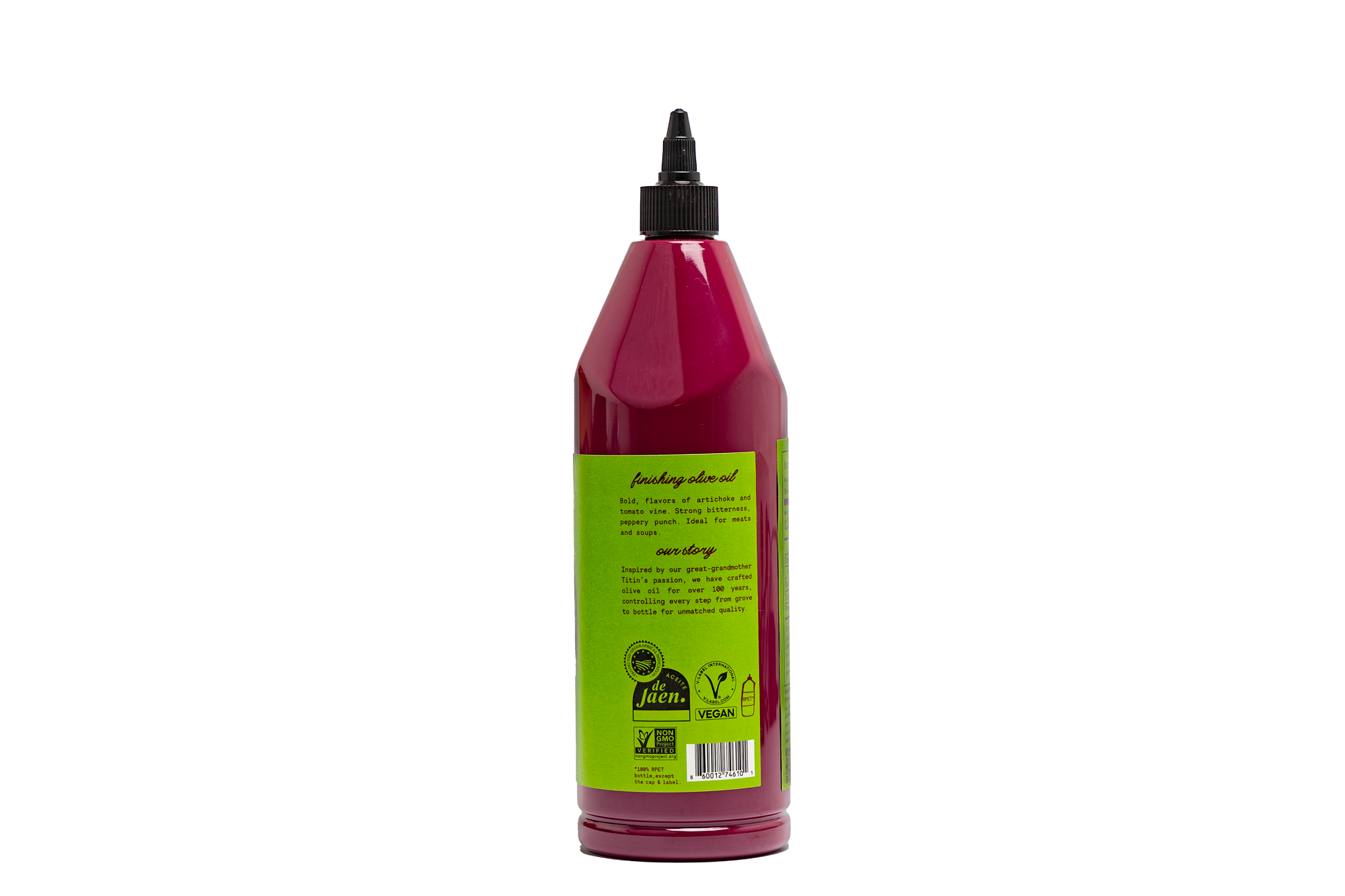
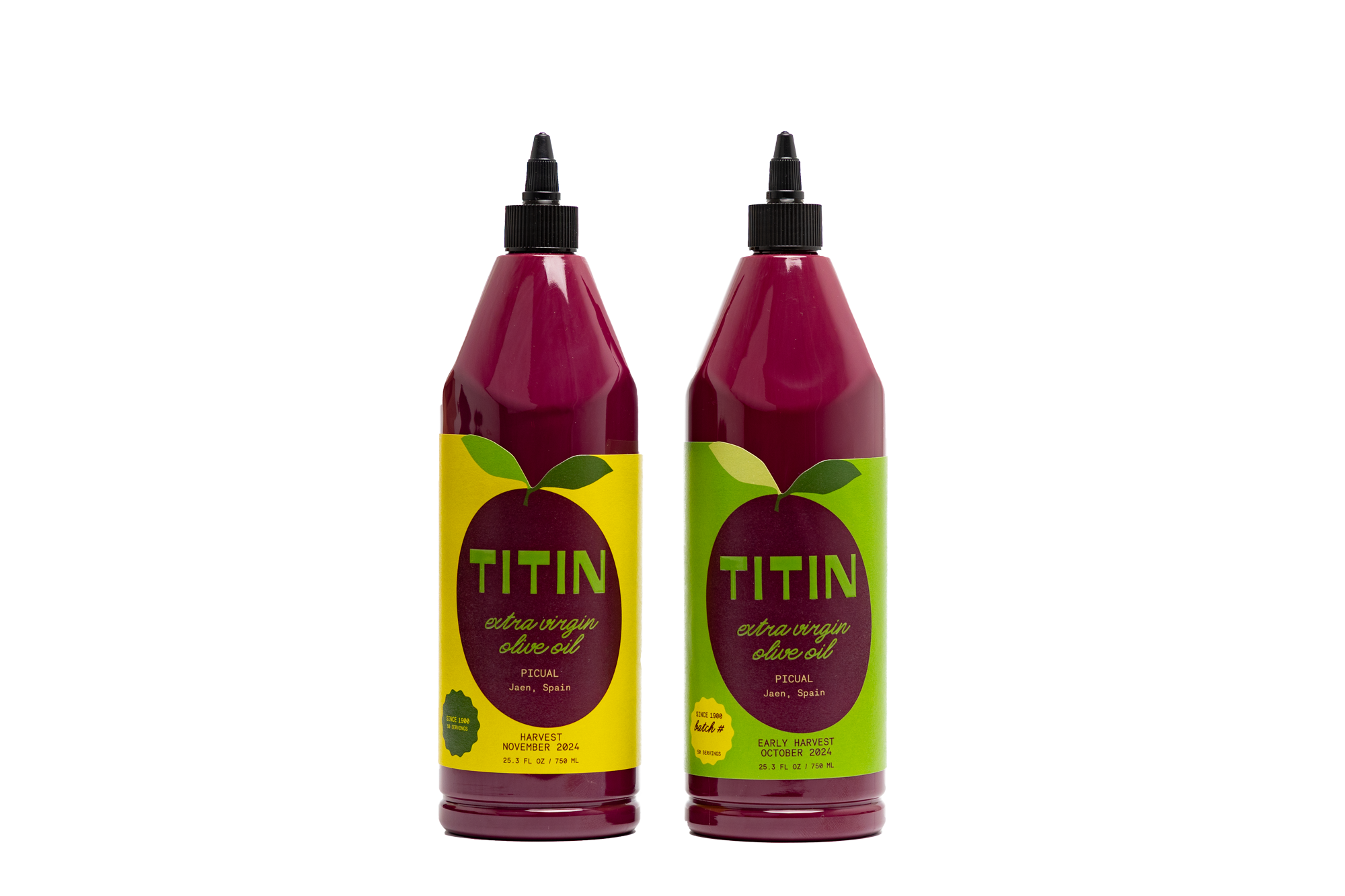
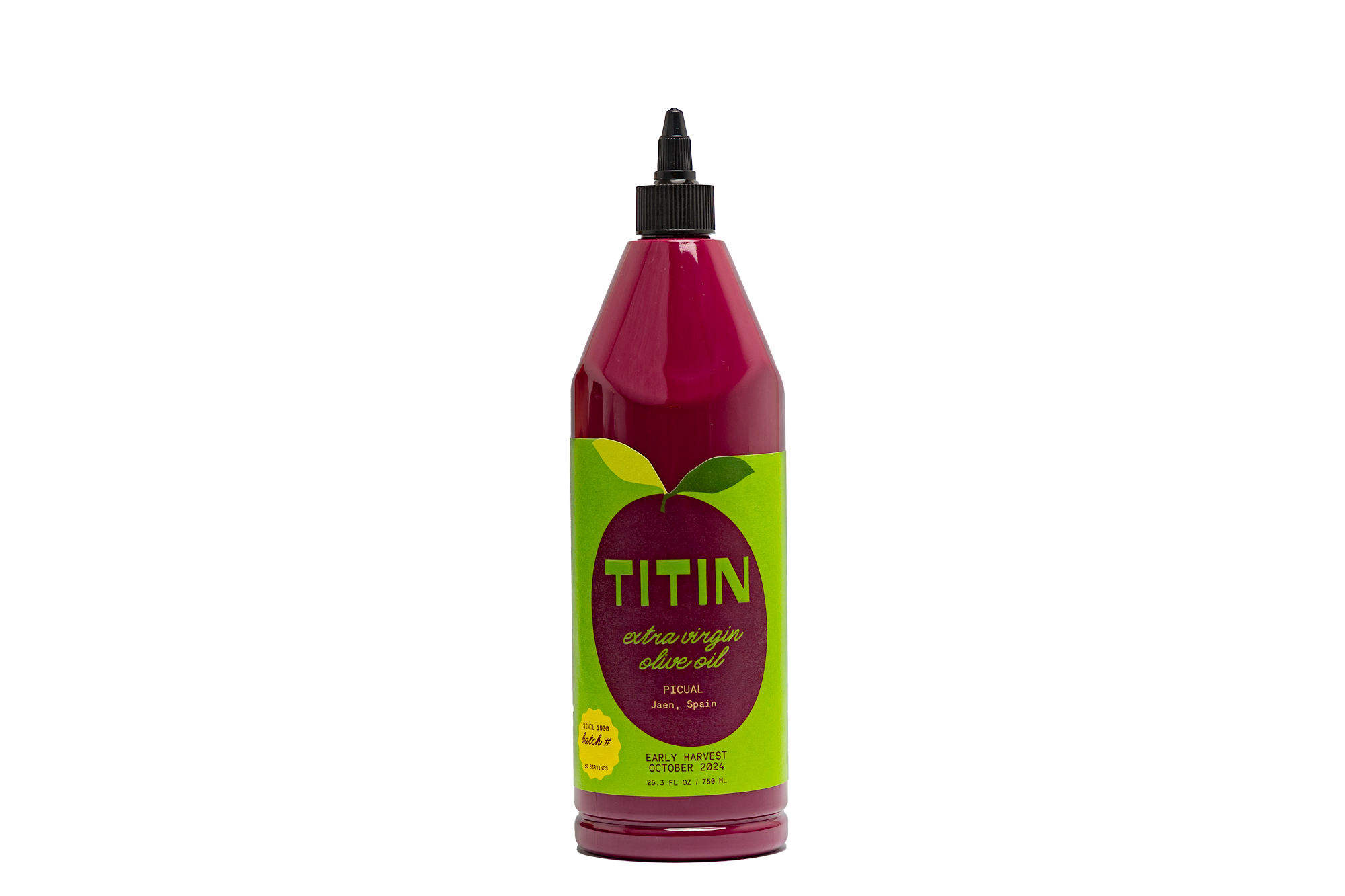
Picual is the most widely planted variety in Jaén and one of the most recognizable EVOO profiles in the world. Our Finishing Picual has distinctive artichoke and tomato vine notes, a strong peppery punch, and a balanced bitterness on the finish.
Best for: Bold green salads (arugula, radicchio, frisée), dressings for grilled meats, hearty grain bowls, lentil salads, roasted root vegetables. The peppery finish cuts through rich or bitter ingredients beautifully.
Avoid for: Delicate fish, mild fruit salads, or anywhere you want the oil to play a supporting rather than a leading role.
Dressing pairing: Picual + red wine vinegar + Dijon + a pinch of smoked paprika = the most Mediterranean vinaigrette you've ever had on a steak salad.
Arbosana — Fruity, Delicate, Smooth
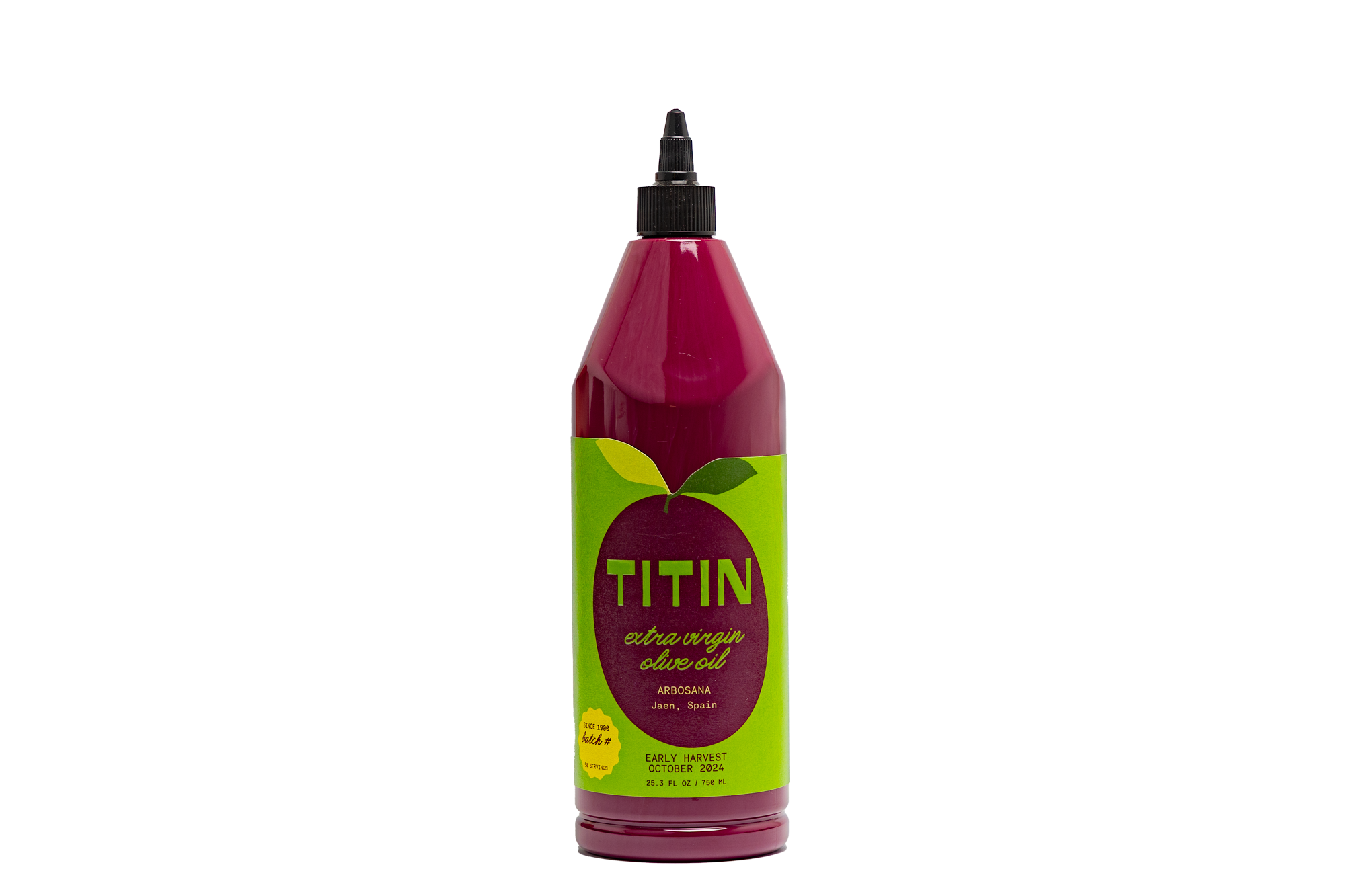
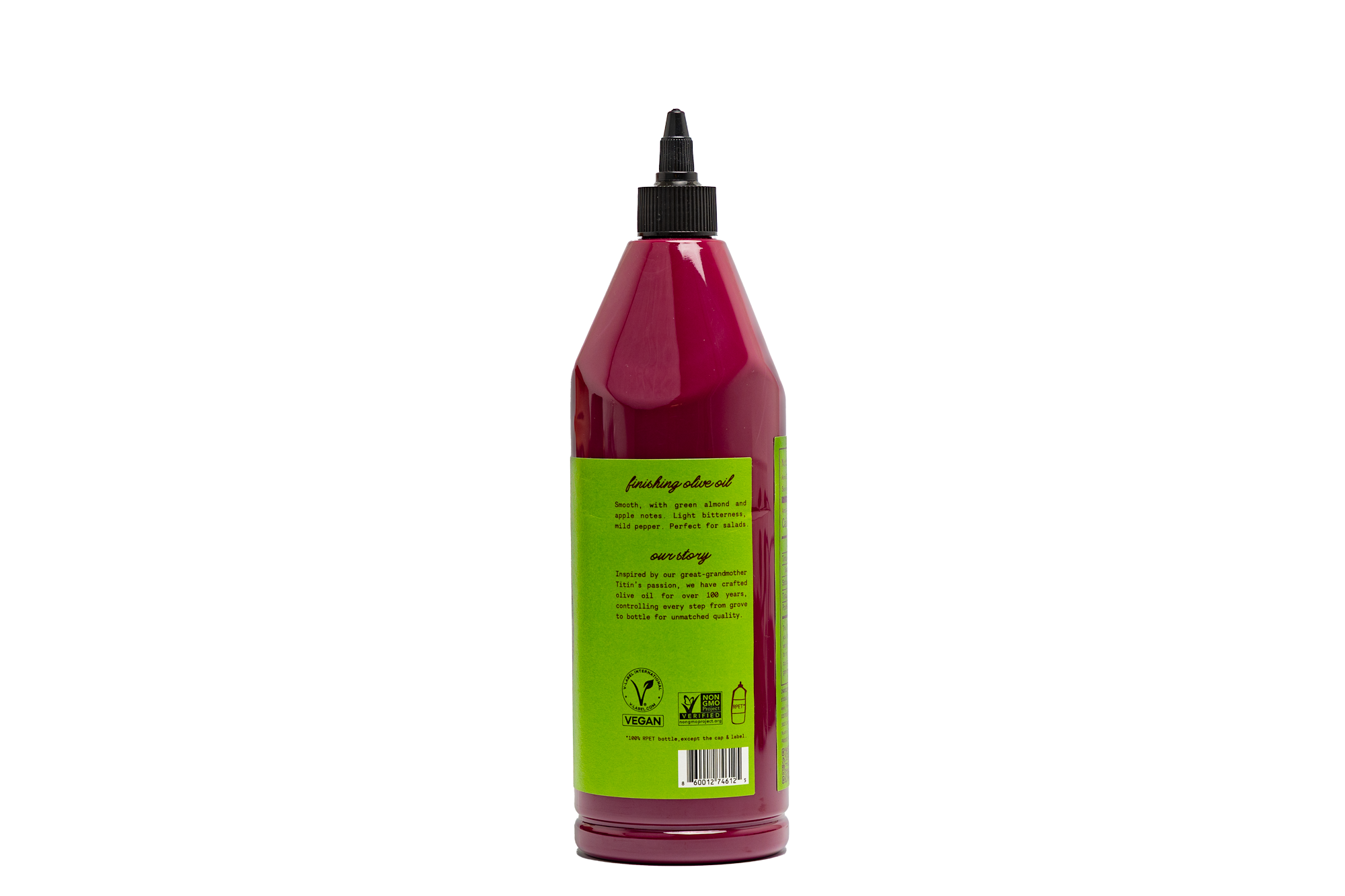
Arbosana is a Catalan variety known for its gentler, more fruit-forward profile. It has soft almond and ripe fruit notes with minimal bitterness and a milder peppery finish.
Best for: Light green salads, seafood dishes, raw fish (crudo, ceviche-adjacent preparations), dressings where you want oil presence without intensity. Also excellent in our olive oil cake recipe — though that's another story.
Avoid for: Dishes that need the oil's intensity to come through against strong competing flavors.
Dressing pairing: Arbosana + fresh lemon juice + a tiny pinch of flaky salt + fresh dill = the perfect dressing for a shrimp and avocado salad.
Frantoio — Grassy, Herbaceous, Complex
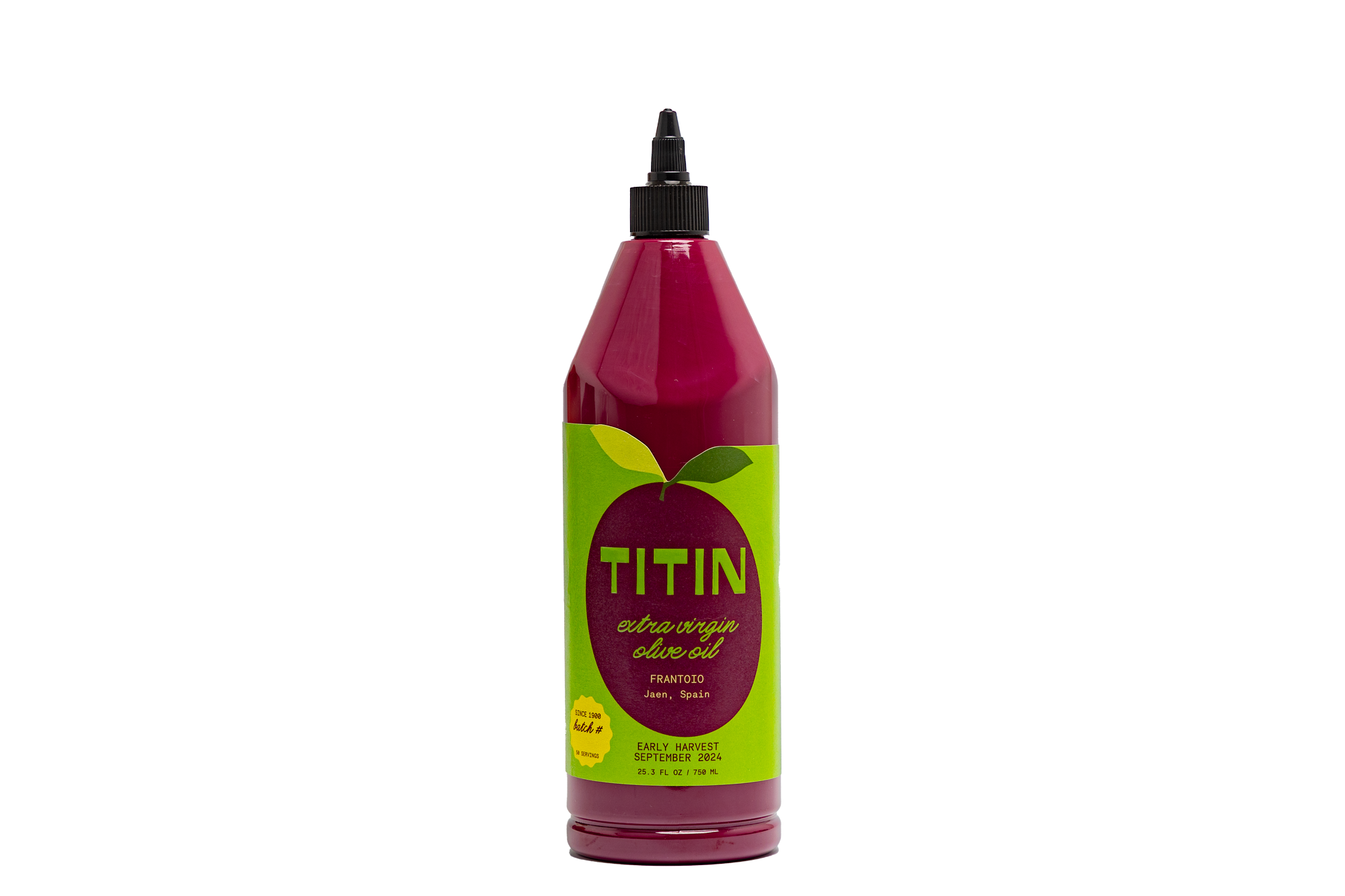
Frantoio is an Italian variety with widespread global planting. It has a notably fresh, grassy character — think freshly cut herbs, green tomato, and a clean finish with mild pepper.
Best for: Caprese-style salads, dressings with fresh herbs (basil, parsley, tarragon), pasta salads, or anywhere you want the "fresh from the garden" quality to lead.
Dressing pairing: Frantoio + white wine vinegar + fresh basil + a sliver of garlic = a dressing that tastes like summer in Tuscany.
For everyday salads where you want all-purpose versatility, our Universal EVOO Collection — with its balanced fresh olive and almond notes — is the most reliable starting point. It works across the full ratio spectrum without imposing a strong directional flavor.
5 Olive Oil Dressing Recipes for Every Occasion
Here are five variations built on the base formula, each designed to highlight a specific EVOO character and salad pairing.
1. Classic Lemon EVOO Dressing
The simplest, most universal dressing in Mediterranean cooking. Three ingredients, infinite applications.
- 3 tbsp Universal or Finishing Picual EVOO
- 1 tbsp fresh lemon juice
- ¼ tsp fine sea salt
Whisk together. Use on arugula, grains, steamed vegetables, or as a finishing drizzle on hummus.
Why it works: The brightness of the lemon lifts the oil's fruitiness. With a Picual, the peppery finish creates a three-note flavor — citrus, oil, heat — that makes even plain lettuce interesting.
2. Red Wine Vinegar Vinaigrette (The Everyday Workhorse)
- 3 tbsp Universal EVOO
- 1 tbsp red wine vinegar
- ½ tsp Dijon mustard
- 1 small garlic clove, finely minced or grated
- ¼ tsp fine sea salt
- Pinch of black pepper
Add vinegar, Dijon, garlic, and salt to a jar. Pour in oil, seal, shake for 30 seconds. Taste and adjust.
Best on: Classic green salads, roasted pepper salads, French-style bistro salads with frisée and lardons.
3. Bold Finishing Drizzle (Picual + Balsamic)
This is less a traditional vinaigrette and more a finishing sauce — somewhere between a dressing and a condiment.
- 2 tbsp Finishing Picual EVOO
- 1 tbsp aged balsamic vinegar
- Pinch of flaky sea salt
Stir gently (don't fully emulsify — the layers are part of the appeal). Drizzle over sliced tomatoes, burrata, grilled eggplant, or a summer vegetable platter.
Why balsamic and Picual work together: Balsamic's sweetness and viscosity balance Picual's bitterness and pepper. The result is sweet-savory-spicy in one spoonful.
4. Herb & Garlic EVOO Dressing (Mediterranean Style)
- 3 tbsp Frantoio or Universal EVOO
- 1 tbsp white wine vinegar
- 1 tsp fresh lemon juice
- 1 small garlic clove, grated
- 1 tbsp finely chopped fresh parsley or basil
- ½ tsp dried oregano
- ¼ tsp salt
Combine all ingredients and let sit for 10 minutes before using — the herbs infuse into the oil. Use on Greek-style salads, grilled chicken, or roasted zucchini.
Tip: If you want to make a large batch of this, consider using our infused olive oil guide to pre-make an herb-infused EVOO. The flavor depth is significantly greater.
5. Honey-Lemon Arbosana Dressing (Light and Fruity)
- 3 tbsp Finishing Arbosana EVOO
- 1 tbsp fresh lemon juice
- 1 tsp raw honey
- ¼ tsp Dijon mustard
- Pinch of salt
Whisk until emulsified. The honey thickens the dressing slightly and creates a glossy coat on the leaves.
Best on: Butter lettuce, watercress, sliced pears or figs, toasted walnut salads. Also excellent as a dipping sauce for crusty bread alongside soft cheese.
How to Emulsify Your Dressing So It Doesn't Separate
Olive oil and water-based acids (lemon juice, vinegar) don't naturally mix — they repel each other at a molecular level. The process of combining them into a temporarily stable mixture is called emulsification, and it's the difference between a dressing that coats your salad and one that slides off the leaves.
The three emulsification methods, ranked:
1. Dijon mustard (most practical). Mustard contains mucilage, a compound that acts as a natural emulsifier. Even a small amount — ½ teaspoon — significantly increases how long your dressing stays blended. This is the easiest, most reliable method for everyday dressings.
2. Honey or maple syrup. Sweeteners add viscosity and help the oil and acid cling together. They also round out sharp acidic notes. Use sparingly — ½ to 1 teaspoon — unless you want a notably sweet dressing.
3. Vigorous whisking or shaking. Without an emulsifier, you can still create a temporary emulsion through mechanical force. Whisk for 30–60 seconds or shake a sealed jar hard. The dressing will re-separate in 10–15 minutes, so use it immediately or re-shake before serving.
The garlic trick. A clove of raw garlic, when grated rather than sliced, releases juices that also have mild emulsifying properties. Grated garlic + Dijon is the most stable emulsion you can achieve without equipment.
A true permanent emulsion (like mayonnaise) requires a high-speed blender and egg yolk as the emulsifier. For salad dressings, a good shake before serving is sufficient — and expected.
Storage, Shelf Life, and the Mistakes Most People Make
How long does homemade olive oil dressing last?
Stored in a sealed jar in the refrigerator, a basic olive oil vinaigrette (without fresh garlic or fresh herbs) lasts 2 weeks comfortably. If you've added fresh garlic or fresh herbs, use it within 5–7 days for food safety and peak flavor.
The cold fridge problem. Olive oil solidifies at refrigerator temperatures — it turns cloudy and partially solid. This is completely normal and does not indicate spoilage. Simply remove the jar from the fridge 10–15 minutes before using, or run the jar under warm water for 30 seconds. Then shake to re-emulsify.
The three most common mistakes:
Using old or low-quality olive oil. This is by far the most impactful error. Rancid or stale olive oil doesn't just taste flat — it has an unpleasant waxy or crayony aftertaste that no amount of lemon juice will fix. If your oil smells like crayons, old nuts, or cardboard, it's past its prime. Olive oil should smell fresh — grassy, fruity, or slightly peppery.
Dressing the salad too early. The acid in a vinaigrette begins wilting lettuce almost immediately. Dress your salad no more than 2–3 minutes before serving. The exception: grain salads, legume salads, and roasted vegetable salads actually improve when dressed 15–30 minutes ahead, as the ingredients absorb the dressing.
Using too much. A common mistake, especially for first-timers. You need roughly 1–1.5 tablespoons of dressing per 2 cups of salad greens. More than that and the leaves become soggy. Less and you get dry patches. Dress in a large bowl and toss thoroughly for even coverage.
FAQ — Olive Oil Dressing
What is the best olive oil for salad dressing? Extra virgin olive oil with a recent harvest date, acidity below 0.8%, and a flavor profile matched to your salad. For everyday dressings, a Universal Picual EVOO with fresh olive and almond notes works across the widest range of salads. For finishing drizzles and bolder applications, a Finishing Picual with its characteristic pepper and artichoke notes adds complexity that no neutral oil can replicate.
Can I use regular olive oil instead of extra virgin for dressings? Technically yes, but the flavor difference is significant. Regular or "pure" olive oil is refined, which strips most of the polyphenols, antioxidants, and aromatic compounds responsible for the flavor you're chasing in a homemade dressing. It tastes flat by comparison. For raw applications like dressings, EVOO is worth it.
Why does my olive oil dressing taste bitter? Bitterness in an EVOO dressing usually comes from one of three sources: high-quality oil with genuine polyphenol bitterness (this is a good sign, not a flaw), old or rancid oil (in which case the bitterness will be unpleasant and waxy), or raw garlic that has been cut rather than grated (the sliced interior releases more intense, sharp compounds). If it's the first, add a small amount of honey to balance. If it's the second, the oil needs to be replaced.
How do I make olive oil dressing without vinegar? Replace vinegar with fresh lemon juice or fresh citrus in the same quantity. Lime juice works especially well in dressings for Mexican-inspired salads or anything with avocado. Orange juice adds sweetness and works well with Arbosana EVOO for fruit-forward salads. You can also use a combination — lemon + a splash of red wine vinegar is a classic Mediterranean balance.
Is olive oil dressing healthy? Yes. Extra virgin olive oil is one of the most well-studied healthy fats in human nutrition. It is a foundational element of the Mediterranean diet, which is consistently associated with reduced cardiovascular risk, anti-inflammatory effects, and longevity outcomes in population studies [FUENTE: New England Journal of Medicine, PREDIMED trial, 2013]. The polyphenols in high-quality EVOO — specifically oleocanthal and oleacein — have been shown in laboratory studies to exhibit anti-inflammatory activity similar in mechanism to ibuprofen [FUENTE: Nature, Beauchamp et al., 2005]. A homemade EVOO dressing with no added sugars, no preservatives, and no refined seed oils is substantially healthier than most commercial dressings.
Can I make olive oil dressing ahead of time? Yes. Make a large batch (without fresh garlic or fresh herbs) and refrigerate in a sealed jar for up to 2 weeks. Add fresh garlic and herbs the day you plan to use the dressing for best flavor and safety. Always shake or whisk before each use, and let it come to room temperature if the oil has solidified.
The Bottom Line
A great olive oil dressing recipe is simple. The formula is not the hard part — it's the ingredient quality that separates a forgettable dressing from one that makes people ask for the recipe. The oil you choose, the freshness of that oil, and matching its flavor profile to what you're dressing are the decisions that actually move the needle.
Whether you start with the classic 3-ingredient base or go straight to one of the five variations above, the principle is the same: use an EVOO you'd be happy to taste on its own, and the dressing almost makes itself.
If you want to explore the flavor differences between our Picual, Arbosana, and Frantoio varieties before committing to a full bottle, our Finishing Olive Oil Trio Pack is the most practical way to taste all three side by side. For everyday dressing in larger quantities, the Universal EVOO Collection — including our 2L jug — is designed exactly for this use case.
Shop our EVOO collection and find the oil that fits your kitchen